
domestic ventilation
& MVHR Installation in Northern Ireland
Atlantic Air specialises in the design, installation and commissioning of domestic ventilation systems, including Mechanical Ventilation with Heat Recovery (MVHR) systems for new builds and renovations.

WHAT IS
Domestic Ventilation
Domestic ventilation plays a vital role in maintaining healthy indoor air quality in modern homes. As properties become more airtight to improve energy efficiency, effective ventilation systems are essential to remove stale air, control moisture and reduce condensation. Atlantic Air specialises in the design, installation and commissioning of domestic ventilation systems across Northern Ireland and the Republic of Ireland, ensuring homes meet current building regulations while delivering consistent fresh air and improved comfort for occupants.
TYPES OF
Domestic Ventilation SYSTEMS
Modern homes require controlled ventilation systems to maintain healthy indoor air quality and prevent issues such as condensation, mould and stale air. There are several types of mechanical ventilation systems commonly used in residential properties, each designed to suit different building types and ventilation requirements. The most common domestic ventilation systems include Mechanical Ventilation with Heat Recovery (MVHR), Positive Input Ventilation (PIV) and Mechanical Extract Ventilation (MEV).
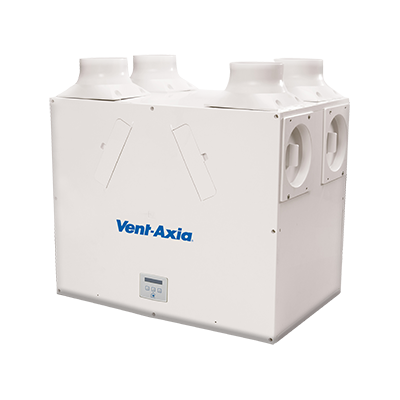
MVHR
Mechanical Ventilation with Heat Recovery
Mechanical Ventilation with Heat Recovery (MVHR) is a whole-house ventilation system designed to provide a continuous supply of fresh, filtered air while extracting stale air from areas such as kitchens, bathrooms and utility rooms.
The system uses a heat exchanger to recover heat from the outgoing air and transfer it to the incoming fresh air. This helps maintain indoor temperatures while reducing heat loss and improving energy efficiency. MVHR systems are particularly suited to modern airtight homes and energy-efficient buildings, where natural airflow is limited.
By constantly circulating fresh air throughout the property, MVHR systems help improve indoor air quality, reduce condensation and create a healthier and more comfortable living environment.
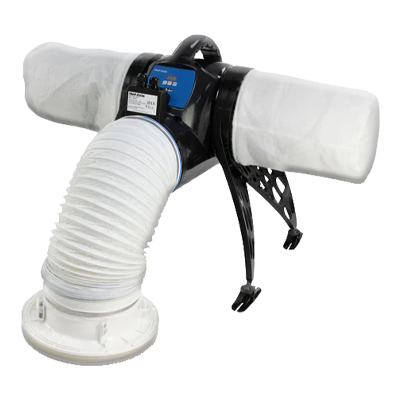
PIV
Positive Input Ventilation
Positive Input Ventilation (PIV) systems work by gently introducing fresh, filtered air into the property, typically from a loft-mounted unit. The system pushes this fresh air into the home, creating a slight positive pressure that forces stale air and moisture out through natural leakage points and existing vents.
PIV systems are commonly used to help reduce condensation and improve indoor air quality in existing homes. They are often installed as a simple and cost-effective solution for properties experiencing issues such as damp or mould caused by poor ventilation.
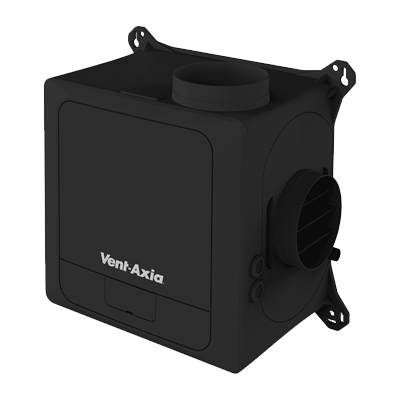
MEV
Mechanical Extract Ventilation
Mechanical Extract Ventilation (MEV) systems continuously extract stale air from wet rooms such as kitchens, bathrooms and utility rooms. The extracted air is removed through ductwork and expelled outside the building, helping to control moisture levels and improve air circulation.
Unlike MVHR systems, MEV systems do not supply fresh air directly. Instead, fresh air enters the building through background vents or natural air inlets. MEV systems are commonly used in properties where full heat recovery ventilation is not required but continuous extraction is needed to maintain good indoor air quality.
CHOOSING THE BEST
MVHR System
As independent MVHR installers, Atlantic Air is not tied to any specific manufacturer or product range. This allows us to provide unbiased advice and recommend the most suitable Mechanical Ventilation with Heat Recovery (MVHR) system for each individual project. Our priority is to select modern, high-performance systems that deliver reliable ventilation, excellent energy efficiency and long-term performance for the property.
We are committed to sourcing the most up-to-date and energy-efficient heat recovery ventilation systems currently available on the market. All systems we specify are carefully selected to meet recognised industry standards, including being SAP Appendix Q listed and compliant with Energy Saving Trust best practice guidance. This ensures the systems we install contribute positively to the overall energy performance of the building while maintaining high levels of indoor air quality.
When choosing an MVHR system, we consider several important factors including the size and layout of the property, airflow requirements, ducting design and the energy performance targets of the building. Our experienced team works closely with homeowners, self-builders, architects and contractors to ensure the correct system is specified and properly integrated into the building design.
By selecting the right MVHR unit and ensuring it is professionally installed and commissioned, Atlantic Air helps create a ventilation system that operates efficiently, quietly and reliably. The result is a home that benefits from a continuous supply of fresh, filtered air while recovering heat that would otherwise be lost, improving comfort levels and supporting long-term energy efficiency.
Our team of skilled engineers have experience in all types of installation, from single unit whole house heat recovery ventilation to large scale commercial air handling units.
We can provide a high quality, energy efficient ventilation system that is tailored specifically to your needs. Based in Co. Tyrone in Northern Ireland, we are able to design, install and commission mechanical ventilation systems with heat recovery all over Ireland.
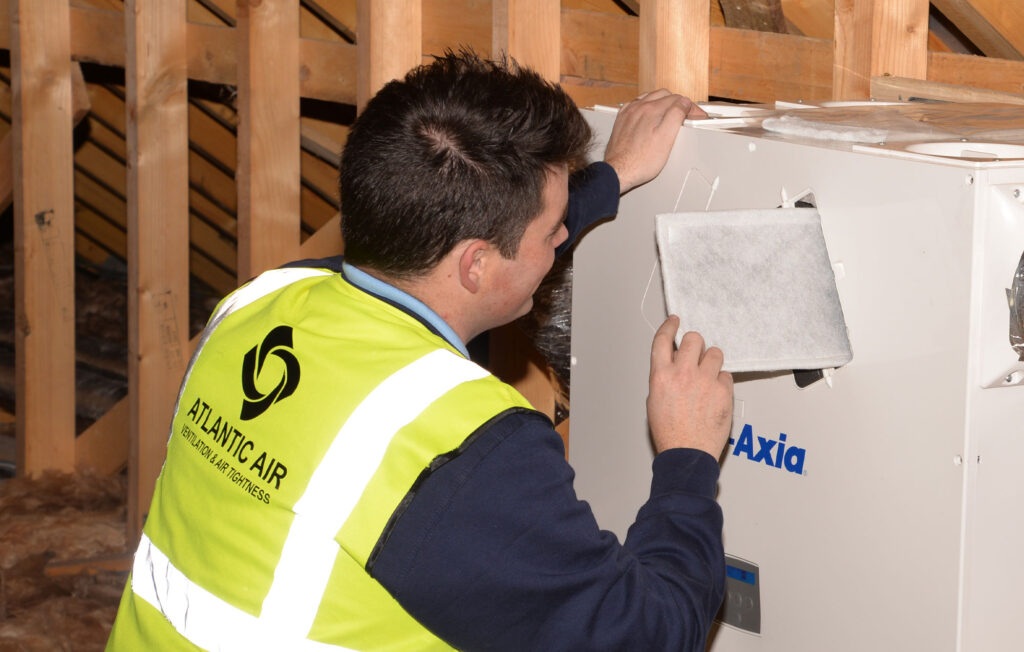
The MVHR unit
We recommend installing MVHR units with in-built cross counter-flow heat exchangers. The heat exchange efficiencies are much higher (up to 90%) and the operating costs are much lower (0.4 W/l/s) compared to that of cross-flow or rotary wheel heat exchangers.
A cross counter-flow heat exchanger transfers heat from one air-stream to another. At its core is a stack of plastic plates, within which are a series of airflow channels.
These channels are aligned precisely to ensure that heat from the extracted warm is transferred to the cooler incoming supply air. Unlike a rotary heat exchanger, a cross counter-flow heat exchanger does not exchange humidity and there is no risk of mixing the air-streams. It is typically used in buildings where hygienic standards require that both air streams are kept completely separate from one another.
This technology is designed to deal with large volumes of warm moist air, thus enabling us to position extract air valves directly over shower enclosures. By extracting steam at its most intense point we can dramatically reduce condensation levels whilst recover the highest possible temperature from the warm air before extraction to the outside.
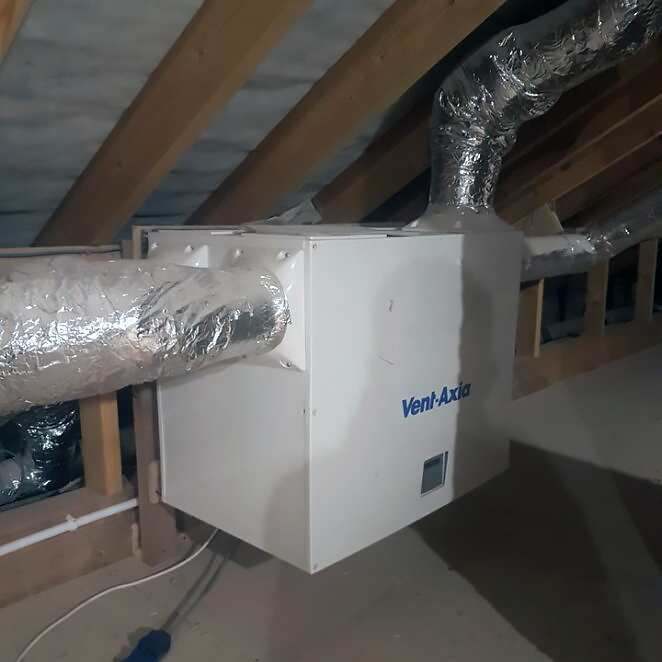
The Ducting system
It is important to remember that the heat exchanger is only one part of the entire ventilation system. Choosing the correct ducting and installing it properly will significantly improve the performance of any heat recovery ventilation unit, regardless of the type of heat exchanger selected.
The reason being; warm air extracted from a wet room (e.g. kitchen, bathroom etc.) must travel through the ductwork to reach the heat exchanger.
Fresh incoming air passing through the heat exchanger must travel through the ductwork before terminating in a habitable room (e.g. living room, bedroom etc.) If this ductwork has been poorly insulated, little to no heat energy will be recovered.
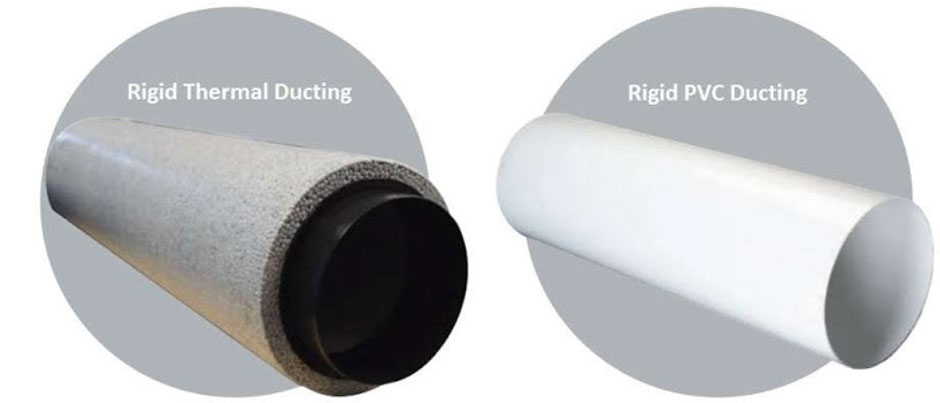
Careful consideration should be given to the location and positioning of ductwork so as to limit airflow restriction. By limiting restriction, the fan motors can run slower, hence the power consumption will be reduced. We recommend installing rigid thermal ducting throughout non-conditioned areas and rigid PVC ducting within the heated envelope.
WHAT IS
Mechanical Extract Ventilation (MEV)
The MEV system incorporates a low energy, high efficiency fan unit which is ducted via multiple air inlets to each wet room in the house, where a ceiling valve acts as the point of extraction. The MEV unit is designed to operate continuously at low speed without occupant intervention. However various control options are available including switches/ sensors that can instruct the system to boost when required e.g. to remove cooking smells or condensation. Typical controls include humidistats, lighting circuits, shower circuits, motion (PIR) sensors, and manual boost switches.
This is a centralised extract system designed to ventilate your entire property without the need for individual extractor fans. Stale moist air is continuously extracted from the wet rooms (e.g. Kitchen, Bathroom etc.) and discharged to the outside via a single fan unit. The extraction of air within each of the wet rooms creates negative pressure within the property, causing fresh air to be drawn in via background ventilators e.g. trickle vents in the habitable rooms.
Installation Process
It is really only practical to install continuous Mechanical Extract Ventilation (MEV) in a new build or during a major refurbishment. We will supply, install and commission the MEV unit and associated ductwork at the first fix stage of the project. The MEV unit is typically mounted in the loft space, but it is small enough to be fitted with in ceiling void or cupboard if necessary. It is necessary to provide a 10mm gap at the bottom of all internal doors to allow the free passage of air through the property.
Benefits of a MEV system
Low-carbon ventilation strategy that complies with the Building Regulations and is SAP Appendix Q recognised.
Ultra-quiet and efficient ventilation unit. The latest technology in low-watt DC fans provides quiet operation, with reduced power consumption, operating costs and life cycle costs.
Low watt motors provide high performance extract ventilation (i.e. up to 98 l/s).
Low profile unit (i.e. 190mm deep) can be mounted in any orientation offering a flexible hassle free installation.
ABS moulded case and lid provides added strength for a more robust unit.
Full 5 year manufactures warranty.
Ventilation for
SELF BUILD HOMES
Atlantic Air regularly works with self-build homeowners across Northern Ireland to design and install ventilation systems that meet current building regulations while maintaining healthy indoor air quality. As modern homes are built to increasingly airtight standards, effective mechanical ventilation is essential to remove moisture, control condensation and provide a consistent supply of fresh air throughout the property.
Our experienced team works closely with self builders, architects and contractors during the design and construction stages to ensure the most suitable ventilation system is specified for the property. Whether installing Mechanical Ventilation with Heat Recovery (MVHR) in an energy-efficient new build or recommending alternative ventilation solutions where appropriate, Atlantic Air provides expert guidance, professional installation and full commissioning to ensure systems operate efficiently and reliably.
By incorporating the correct ventilation system from the early stages of a self-build project, homeowners can improve comfort, protect the building fabric and ensure compliance with ventilation requirements under current building regulations.

Domestic Ventilation Services Across
Northern Ireland & the Republic of Ireland
Atlantic Air provides domestic ventilation design and installation services for homes across Northern Ireland and the Republic of Ireland. We regularly work with homeowners, self-builders and developers in Belfast, Derry, Tyrone, Armagh, Antrim, Down and Fermanagh, delivering ventilation systems that maintain healthy indoor air quality while supporting energy-efficient building performance. Whether installing Mechanical Ventilation with Heat Recovery (MVHR) systems for new builds or ventilation solutions for renovation projects, our experienced team ensures every system is designed and installed to meet current building regulation requirements.
FAQs
Domestic ventilation refers to systems designed to supply fresh air into a home while removing stale, humid air. Proper ventilation helps maintain healthy indoor air quality, reduce condensation and prevent mould growth. Modern homes are built to be more airtight, which makes mechanical ventilation systems increasingly important.
The most common domestic ventilation systems include Mechanical Ventilation with Heat Recovery (MVHR), Mechanical Extract Ventilation (MEV) and Positive Input Ventilation (PIV). The most suitable system depends on factors such as the size of the property, the airtightness of the building and the overall ventilation requirements.
Mechanical Ventilation with Heat Recovery (MVHR) is a system that extracts stale air from kitchens, bathrooms and utility rooms while supplying fresh, filtered air to living areas and bedrooms. The system uses a heat exchanger to recover heat from the outgoing air and transfer it to the incoming fresh air, helping to improve energy efficiency while maintaining good indoor air quality.
Yes. Modern building regulations require adequate ventilation in new homes to ensure healthy indoor air quality. Because new builds are designed to be highly airtight to improve energy efficiency, mechanical ventilation systems such as MVHR are often required to maintain airflow and prevent moisture build-up.
MVHR systems offer several benefits including improved indoor air quality, reduced condensation and mould risk, better temperature control and improved energy efficiency. By recovering heat from extracted air, MVHR systems help maintain comfortable indoor temperatures while reducing heat loss.
Yes. Proper ventilation systems remove excess moisture from kitchens, bathrooms and utility rooms, helping to control humidity levels within the home. This significantly reduces the risk of condensation, damp and mould growth.
Ventilation systems should ideally be designed and specified during the early stages of a new build project. Planning ventilation early allows ductwork and system components to be integrated into the building design, ensuring the system operates efficiently and meets building regulation requirements.
Yes. Domestic ventilation systems require periodic maintenance to ensure they operate efficiently. This typically includes cleaning or replacing filters, checking airflow rates and servicing the ventilation unit. Regular maintenance helps maintain good air quality and extends the lifespan of the system.