
AIR TIGHTNESS SPECIALISTS
Your Comfort Is Our Business
Atlantic Air provides professional air tightness testing across Northern Ireland and the Republic of Ireland, delivering accurate results, clear reporting and full compliance support.

WHAT IS
AIR TIGHTNESS?
Air tightness testing is an essential part of modern construction, ensuring buildings meet energy efficiency standards and building regulation requirements. Also known as an air permeability test or blower door test, the process measures the amount of uncontrolled air leakage through gaps in the building fabric. By identifying where air escapes, the test helps improve insulation performance, reduce heat loss and ensure compliance with building regulations.
Atlantic Air provides professional air tightness testing across Northern Ireland, the Republic of Ireland and the UK, supporting homeowners, self-builders, contractors and developers to achieve the required building control standards.
Higher heating and cooling costs
Poor energy performance ratings
Draughts
Why Air Tightness Testing
Is Required
Air tightness testing has been a mandatory requirement for new buildings under Building Regulations Part L since 2006. The purpose of the test is to ensure that buildings achieve the required air permeability standards before building control approval is granted.
A building with excessive air leakage will lose heat more quickly, increasing energy consumption and reducing the overall energy performance rating. By measuring the rate of air leakage, the test helps verify that the building meets its design specifications and energy efficiency targets.
Why should I build an airtight dwelling?
Achieving a good level of airtightness is important for the energy efficiency of the dwelling and the comfort of occupants. The benefits of improved insulation levels and energy efficient heating systems will be lost if warm air can leak out of a building and cold air can flow in.
As airtightness improves, the energy needed for heating the building reduces. However, it is neither comfortable nor safe to live in an airtight dwelling without adequate ventilation. Therefore, when constructing an airtight dwelling it is important to also provide controlled ventilation: build tight and ventilate right.
How do I improve the air tightness level of my home?
To limit the effects of air leakage, you first need to understand how it is occurring, this is where Atlantic Air can help;
- We can provide expert advice on all fundamental design factors to ensure the envelope of the building will be made as airtight as possible.
- We can meet with the Main Contractor/ Builder on site to advise on potential problem areas and provide appropriate solutions.
- We can undertake a visual inspection of the building at various stages during the construction process and if necessary carryout preliminary air tightness testing.
- We will inspect all sealing works to ensure the ‘airtight’ design is built correctly on site.
IMPORTANT: With so many different trades and sub-contractors working on a dwelling, it is essential that one person (typically the Site Foreman) has the responsibility for ensuring that the provisions of air tightness are delivered the highest possible standards.
How is the air tightness test carried out?
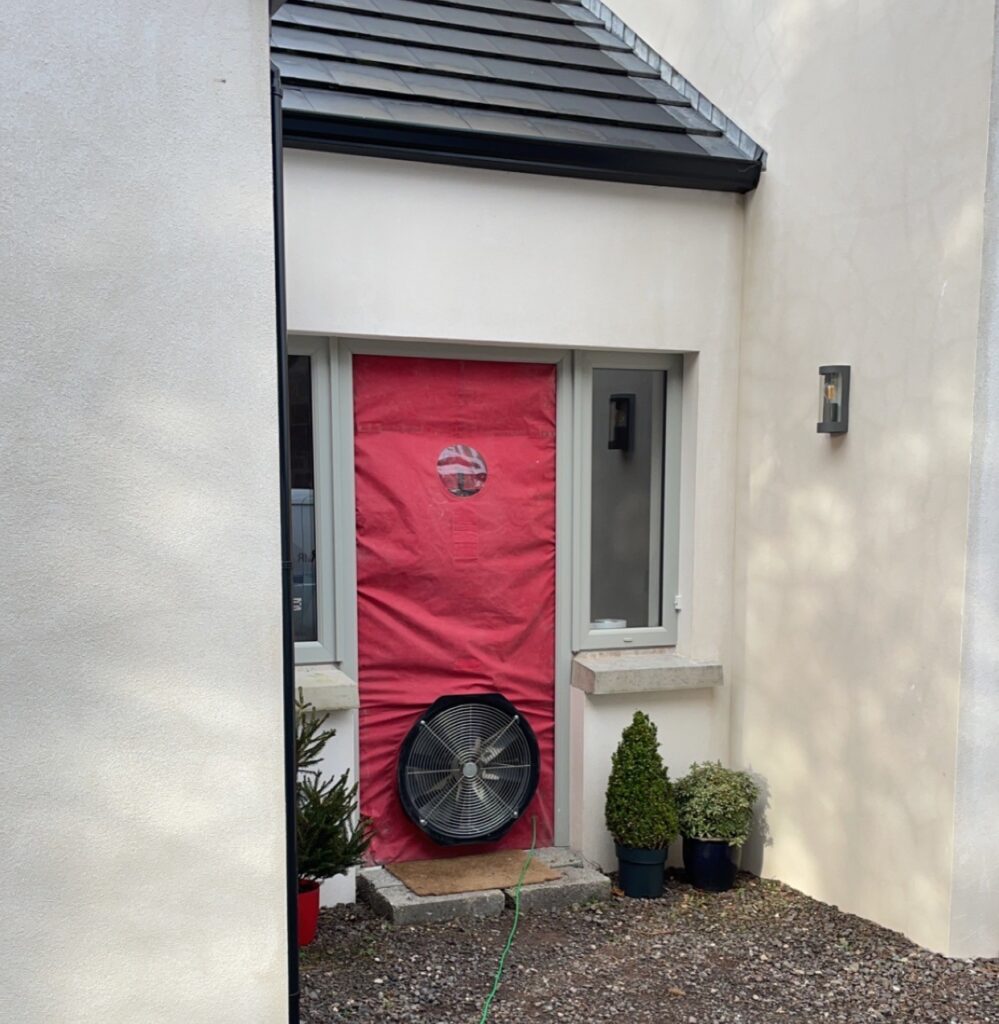
The first step is to undertake all necessary site preparation, including temporary sealing of chimney flues, mechanical fans and air combustion vents. The test engineer will then calculate the envelope area of the building to include ceilings, walls and floors.
Several measurements are taken to determine the environmental conditions, these include; wind speeds, internal and external temperatures and barometric pressure readings. Air is then extracted from the building using calibrated fan units (to UKAS standards).
The size of the fans used is dependent on the surface area of the building envelope. The test engineer will record the airflow rates and measure the resulting pressure differentials across the building at set intervals. The entire process should take no longer than two hours to complete.
If the building passes, the completed test report is sent directly to the client within 48 hours of carrying out the test. If the building fails the test, Atlantic Air can use a number of survey techniques (e.g. smoke testing) to locate the cause of the problem and advise on the most practical remedial action. In 99% of cases problem areas are identified/ fixed and a retest is carried out on the same day at no extra cost.
Air Tightness Testing for Passive House Certification
Air testing a Passive House is a critical step in ensuring its exceptional performance and energy efficiency. With meticulous attention to detail, our team at Atlantic Air conducts comprehensive air tightness testing to evaluate the building envelope’s integrity at various stages throughout the construction process. By pressurising and depressurising the structure, we will identify any areas of air leakage, and recommend the most suitable method of sealing them to meet the stringent standards of Passive House certification (i.e. ≤ 0.6 air changes per hour at 50 Pa). Our precise testing process not only verifies compliance but also guarantees a comfortable indoor environment with minimal energy loss.

Air Tightness Testing Across
Northern Ireland & the Republic of Ireland
Atlantic Air provides professional air tightness testing services throughout Northern Ireland and the Republic of Ireland. Our experienced air tightness testers regularly carry out air permeability testing in Belfast, Derry, Tyrone, Armagh, Antrim, Down and Fermanagh, supporting homeowners, builders and developers to meet building regulation requirements. Whether testing new build homes, apartment developments or commercial buildings, we deliver accurate testing, clear reporting and reliable support to help projects achieve the required energy performance standards.
FAQs
Air tightness testing, also known as an air permeability test or blower door test, measures how much air leaks in or out of a building through gaps in the building fabric. The test helps determine the building’s energy efficiency and ensures it meets the required air permeability standards under building regulations.
Air tightness testing helps identify uncontrolled air leakage within a building. Excessive air leakage can lead to heat loss, higher energy costs and reduced indoor comfort. By measuring and controlling air leakage, the test helps improve energy efficiency and supports compliance with building regulations.
Yes. Most new residential and commercial buildings must undergo air tightness testing to comply with Building Regulations Part L. The test is typically carried out before completion to confirm that the building meets its design air permeability target.
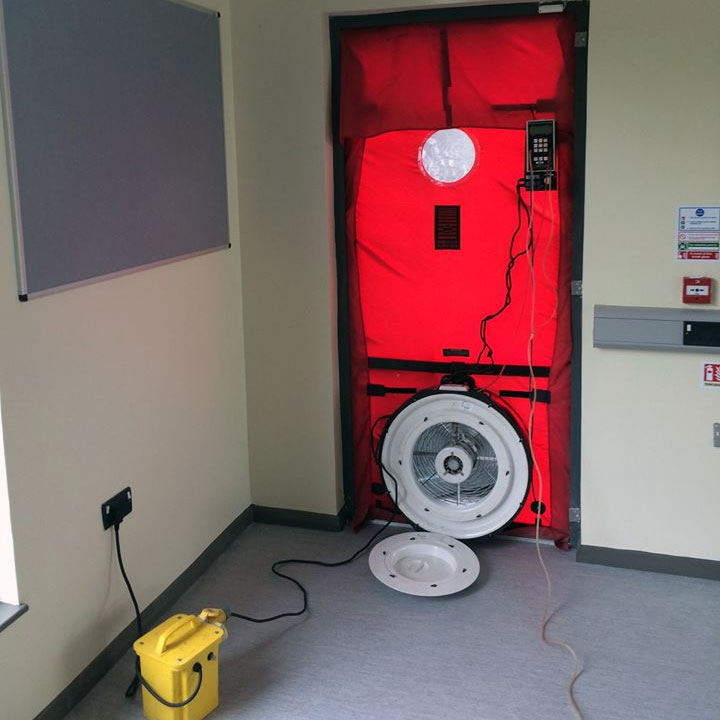
During an air tightness test, a calibrated fan known as a blower door is temporarily installed in an external doorway. The fan creates a controlled pressure difference between the inside and outside of the building. This allows the tester to measure the rate of air leakage through the building envelope and identify areas where air may be escaping.
If a building fails to meet the required air permeability target, additional sealing work may be required to reduce air leakage. Common improvements include sealing gaps around windows, doors, service penetrations and other joints in the building fabric. Once improvements are made, the building can be retested.
Air tightness testing is normally carried out near the end of construction once the building envelope is complete but before final finishes are installed. This allows any air leakage issues to be identified and resolved before the project is completed.
Yes. While airtight construction reduces uncontrolled air leakage and improves energy efficiency, it also limits natural airflow. Proper mechanical ventilation systems, such as Mechanical Ventilation with Heat Recovery (MVHR), are therefore required to maintain healthy indoor air quality.
Air tightness testing is commonly required for new build homes, apartment developments, commercial buildings and some major renovations. The requirement depends on the building type and the applicable building regulation standards.